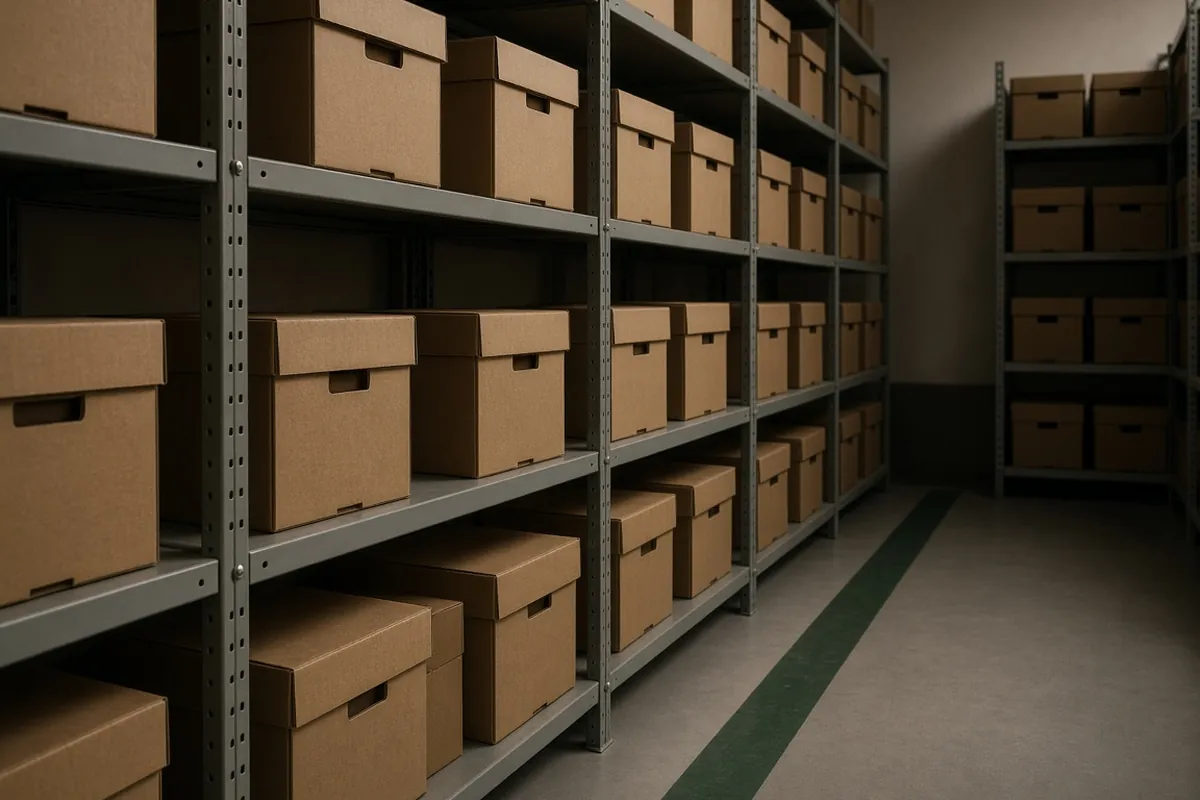
A storage room fails in small, recorded ways: a pipe, a locked door left open, a humidity swing nobody wrote down. Use the questions below as a checklist, and copy a number only when the cited page states it.
The sources are museum notes. A private garage is not a museum, and these questions are not a building code. They live on the ownership costs shelf, next to the blank cost sheet. The car’s own papers are on the provenance note.
Where the room sits

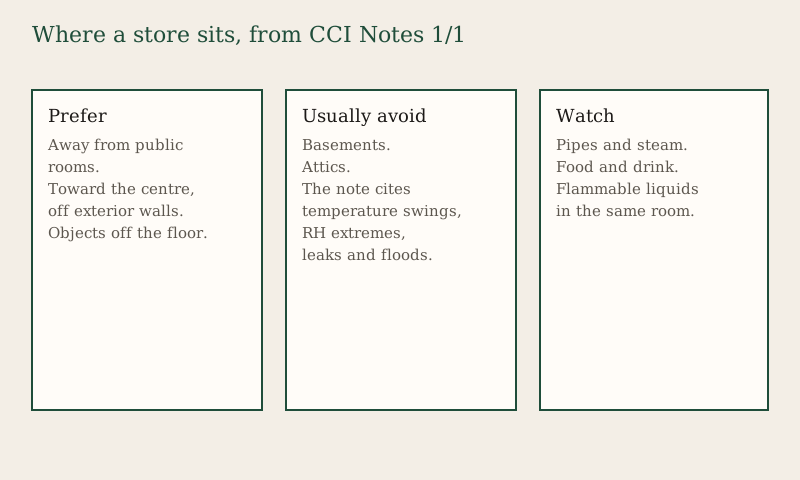
CCI Notes 1/1, read on 15 October 2026, says collection storage areas should be located away from public areas, in the centre of the building, away from exterior walls, and without narrow corridors, sharp turns, stairs or narrow doors. It says basements and attics are usually not appropriate because of temperature fluctuations, extremes of relative humidity, and possible leaks or floods.
It says water or steam pipes are a hazard, so storage should be away from pipes or the pipes should be inspected. Objects should be off the floor, on shelves, platforms or blocks. New objects should wait in a separate holding place before they join the rest. Food and drink should be prohibited in storage. Flammable materials such as solvents, paints, varnishes and waxes should not be stored in or near the collection rooms. Entry should be controlled, and the rooms locked.
Light and humidity lines the pages actually state
Notes 1/1 says lighting should have an intensity of 150 lux or less, and an ultraviolet content of no more than 75 microwatts per lumen. It says to turn lights off when they are not needed, and to keep daylight out.
The same note says to maintain temperature and relative humidity at levels appropriate to the collections, and to avoid extremes and excessive fluctuations. It does not, in that sentence, pick one humidity for every object. The number you write down has to come from a page about the materials you hold, or from the building’s own specification. This site does not add a target of its own.
The CCI page on caring for metal objects, read the same day, does state bands for metals in heritage collections:
- Above 65 percent relative humidity, it says, there is enough water on most clean metal surfaces to support corrosion, and in general metal corrosion speeds up above that threshold.
- A moderate band of 40 to 55 percent is the range it says is usually recommended for organic materials and for composite objects that contain both metal and organic parts. It says that band keeps corrosion risk low for the majority of metals, but not for all.
- Dry environments of 30 percent relative humidity or lower are described as ideal for metals. The same page says low humidity can physically damage organic parts of a composite object.
A collector car is often metal plus cloth, wood, leather, rubber or paint. The metal page’s point about composite objects is the relevant tension: the dry band it prefers for metals is not the moderate band it describes for objects that also contain organic material. Write which materials are in the room, then write which of those published bands you are using and why. Do not average them into a new number.
How often Notes 1/1 says to look
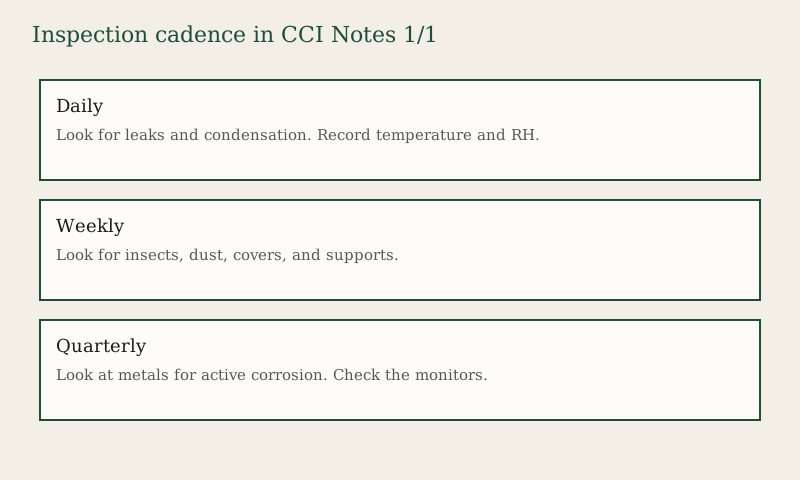
The note splits inspection this way:
- Daily: a short look for leaks, condensation and similar trouble, plus a temperature and relative-humidity reading written down.
- Weekly: insects, dust, covers, supports, and whether objects are where they belong. It says dust is abrasive and reacts with moisture.
- Quarterly or semi-annual: a look at objects for a change in condition; organic materials for infestation and mould, especially after hot, humid periods; metals for active corrosion; mounts and packing; and a check of the monitors, lights, pipes and the fire and security systems.
If a control is not working, the note says to move sensitive objects to a more stable place during the swing. It does not say to leave them and guess.
The printable list
The checks above are also in a plain-text file: storage-facility-checklist.txt. Print it and write the readings next to the lines. A blank line means you have not measured it.
Bills for the room, the energy and the visits go on the cost sheet, still without a sample amount. A lift, a compressor or a climate machine is equipment, not the car: see life-cycle cost.
How this page was written
Both CCI pages were read on 15 October 2026. The lux figure, the ultraviolet figure, and the three humidity bands are quoted from those pages and are not garage specifications invented here. Product names that appear on the metal page are not repeated, because this site is not choosing a product.