In the majority of cases, tire flat-spotting is temporary.
Temporary flat spots disappear once the tires have reached their operational temperature and regained their normal shape.
Permanent flat spots do not resolve with driving and produce persistent vibration.
Start with pressure and visible condition, then keep your movement observations and any inspection findings together. Add the record to your ownership costs file alongside storage and tire expenditure.
What happens while the car stands?
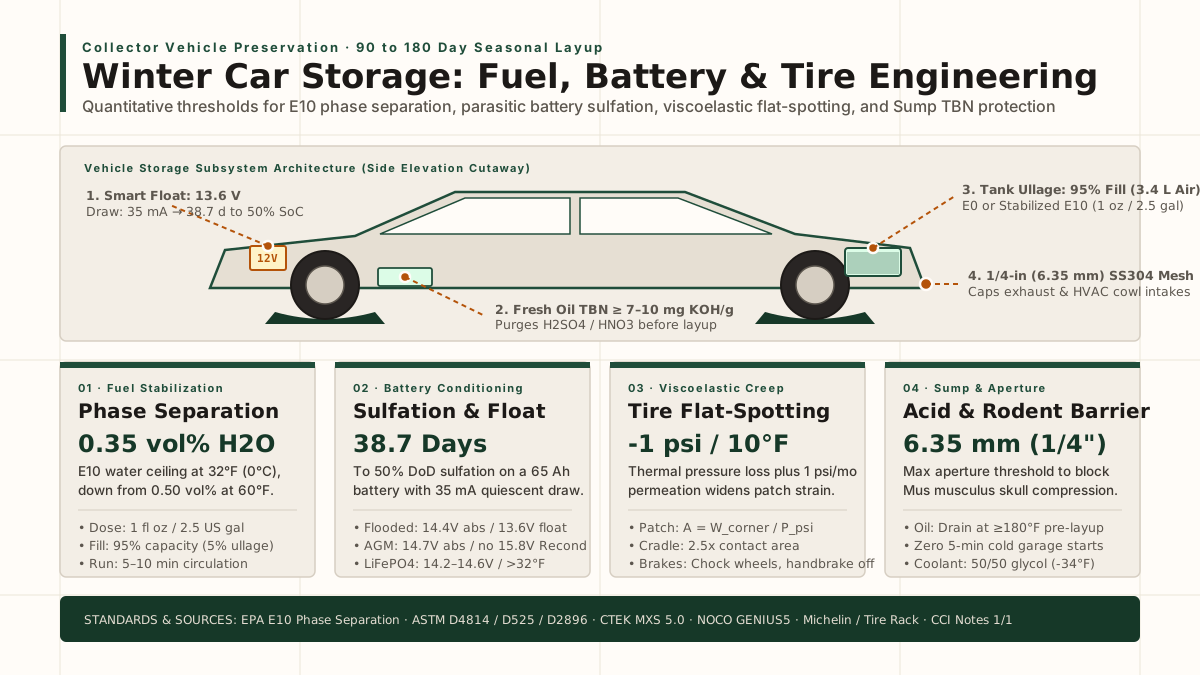
Storage flat-spotting occurs after a tire has been stationary under vehicle load for a prolonged period.
The flat spot is in the area that contacted the ground.
The severity of a tire flat spot depends on tire size, load, internal structure, ambient temperature and time stationary.
Use those headings in your storage record: tire identity, load, garage conditions and time parked. Include the date of the last move and the pressure instructions you are following.
Wheel-lock flat-spotting grinds rubber off at one point.
Keep the storage history and any wheel-lock incident as separate entries when describing the problem.
Pressure before storage and before movement
Underinflated tires are more susceptible to flat-spotting.
The vehicle manufacturer determines correct tire pressure, found in the handbook, door or fuel filler cap.
Use an accurate pressure gauge when checking and adjusting tire pressures.
Check the pressure of all tires, including your spare, at least once a month.
For a cold pressure check, the car has not been driven for at least three hours.
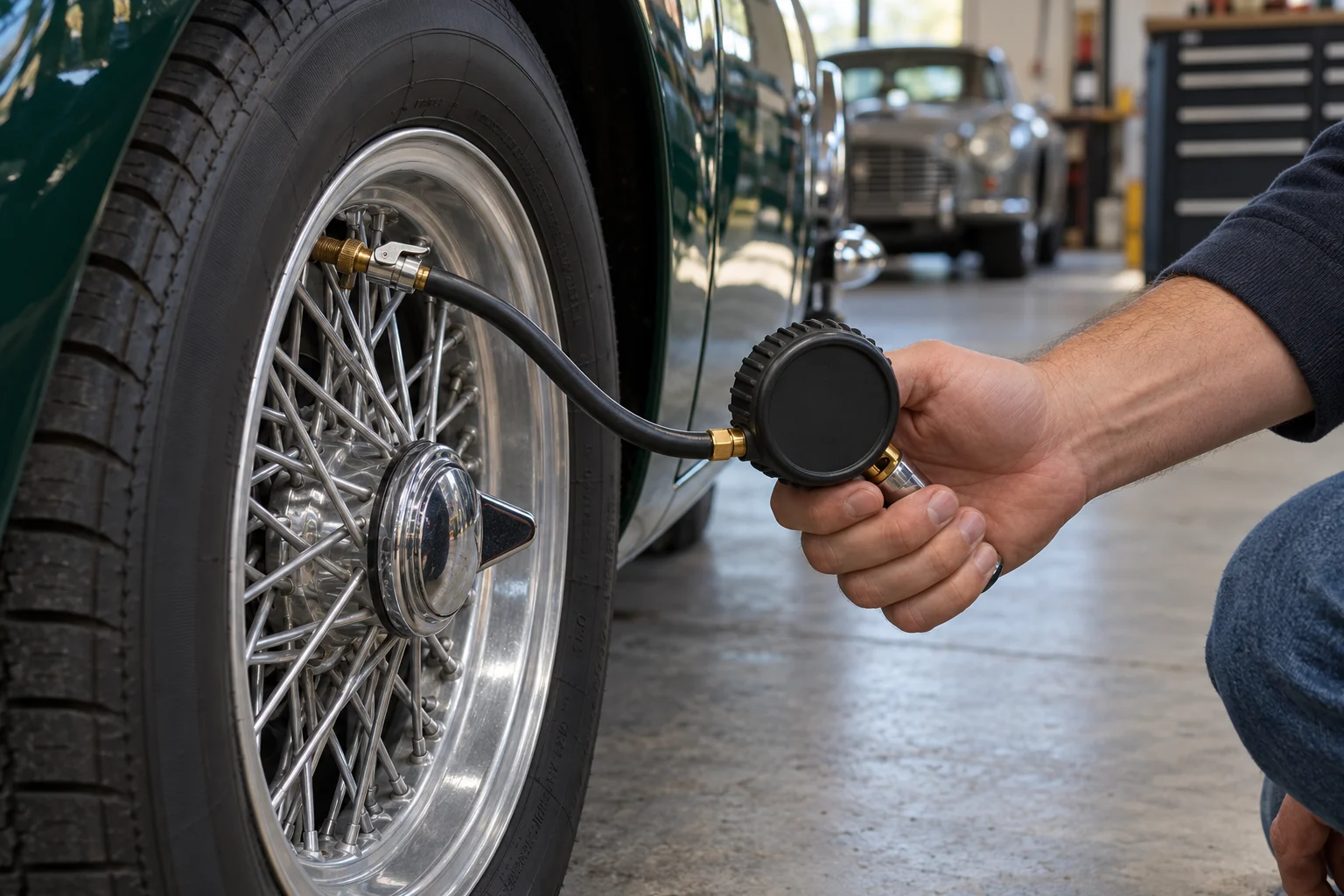
Michelin recommends placard pressure to minimize flat-spotting.
Keep manufacturer pressure advice in its own context
Michelin does not recommend inflation beyond placard pressure.
For long parking, Continental recommends slightly increasing inflation pressure by +0.2 bar to help reduce the chances of flat-spotting.
You should never exceed the maximum recommended cold inflation pressure for your tires.
Tires should not be stored loaded and over-inflated while subjected to heat.
Pirelli advises returning tires to their recommended pressure before use after storage inflation increases.
Write the applicable instruction beside each pressure reading. Keep storage settings and return-to-use settings in separate fields.
Stand time: plan movement, then record it
Michelin recommends regular vehicle operation and movement.
For new unsold Nissan in-stock units, vehicles should be moved every 30 days, in one direction only.
In that Nissan instruction, movement should be enough to rotate the tires 90°.
For those new unsold Nissan in-stock units, long storage time without moving the vehicle may result in permanent flat spots.
For your own car, start the schedule with its applicable storage instructions. Record the planned move, the completed move and the next check in your storage checklist.
What to record during a roll observation
Make the roll observation an entry in your storage log. Before considering movement, work through pressure and visible condition.
Tires with lumps, cracks or objects lodged in the tread should be considered unsafe to use until checked by a professional.
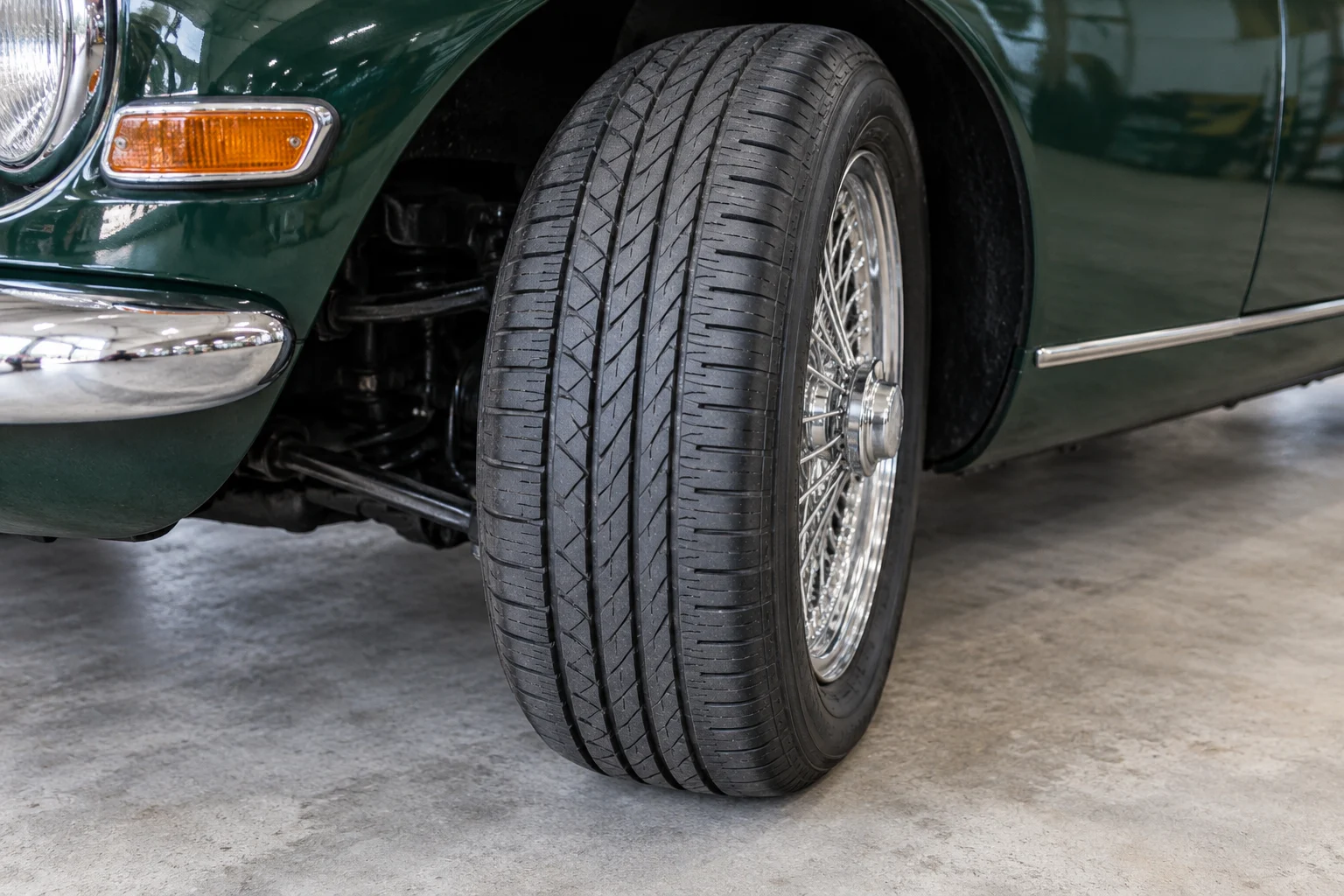
Ford’s new-vehicle storage guidance calls for parking after movement with a different portion of the tread contacting the ground.
Use these prompts for the observation log:
- What was the tire condition before movement?
- Which tread area had been resting on the floor?
- What did you observe after repositioning?
- Was there a thump or vibration?
- What changed during subsequent operation?
- What was the inspection finding?
Temporary vs permanent tire flat spots
A professional inspection confirms which flat-spot type is present.
If vibration when driving does not diminish or go away, you should see a tire specialist and have your tires inspected.
Persistent vehicle vibration, caused by tires or other suspension components, could be an indication of a more serious problem.
The order of diagnostic checks
For new unsold Nissan in-stock units, the dealer procedure calls for removing temporary flat-spotting before tire balance, tire run-out and tire road-force checks.
In that Nissan procedure, flat-spotting that has not been removed can result in incorrect measurements.
Keep the initial symptoms, any change during operation and the workshop findings together in the same record.
Car storage tire cradles: fit and evidence
Michelin says cradle curvature would have to match tire curvature to be effective.
Michelin reports having no data verifying that tire cradles help reduce flat spots.
When considering a cradle, ask about curvature, tire width, pad capacity and installation conditions. Keep the selected product instructions with your storage record.
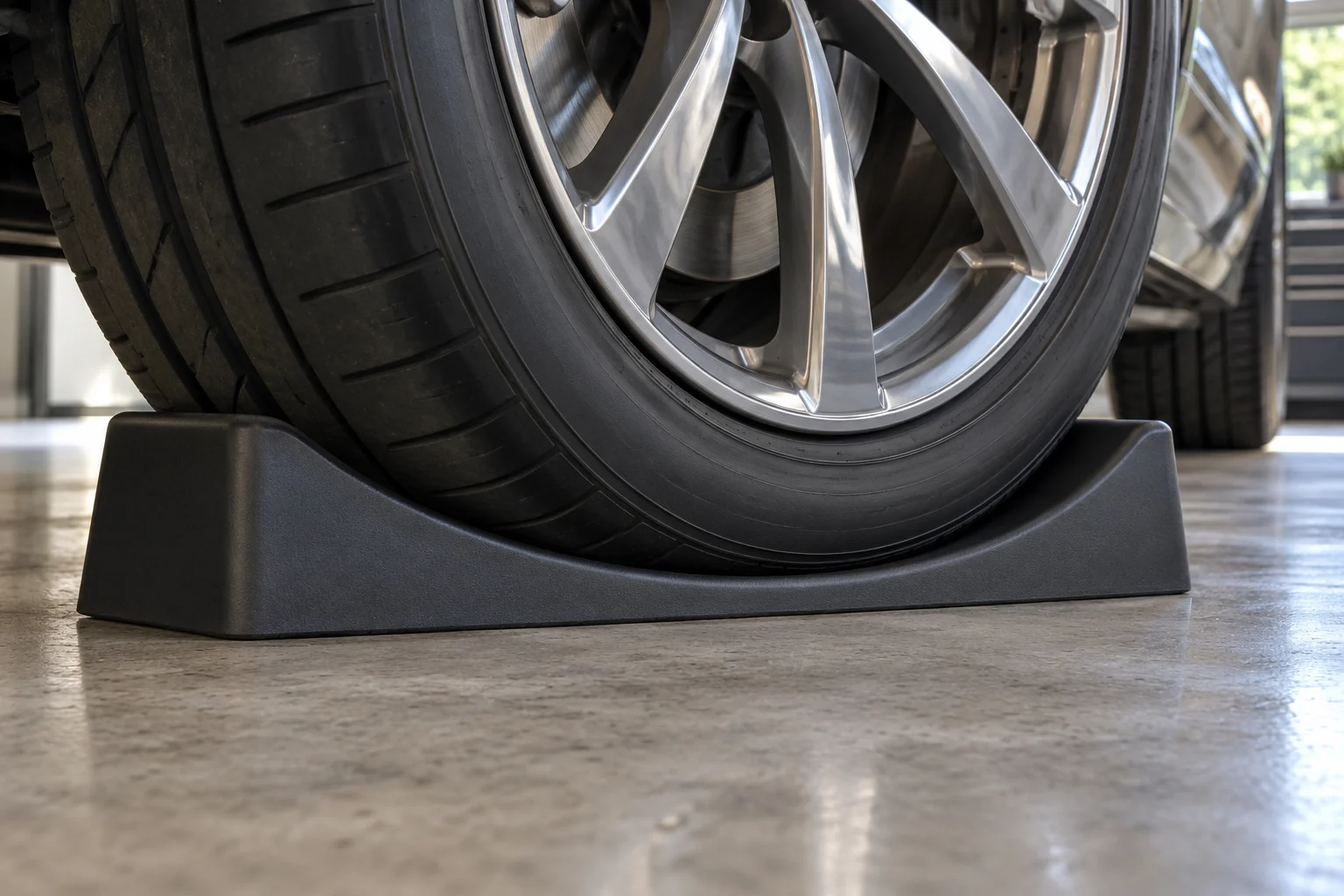
Cradle curvature would have to match tire curvature to be effective.
A product-specific fit example
Race Ramps lists support up to 1,500 pounds per tire storage pad on its Flatstoppers page.
Its 16-inch wide supercar Flatstoppers fit tires up to 14 inches wide.
Use Flatstoppers on a level, flat surface.
Ensure that the bottom of each Flatstopper makes full contact with the ground.
Match your purchase checklist to the exact variant you are considering. Record the product name, fit instructions and installation location.
Close the storage record
Before closing the file, add the pressure readings, movement dates, visible-condition observations and any unresolved vibration. Use the winter storage guide to organize the rest of the car’s layup tasks.
Sources
- Continental — Flat-spotting
- Michelin — Tire Flat Spotting
- Goodyear — Maintaining your tyres during Lockdown
- NHTSA — Tires
- Pirelli — How to store tyres
- Nissan — Tire Flat Spotting, new unsold in-stock vehicle bulletin
- Ford — Modifier Guide, new-vehicle storage section
- Race Ramps — Flatstoppers product page